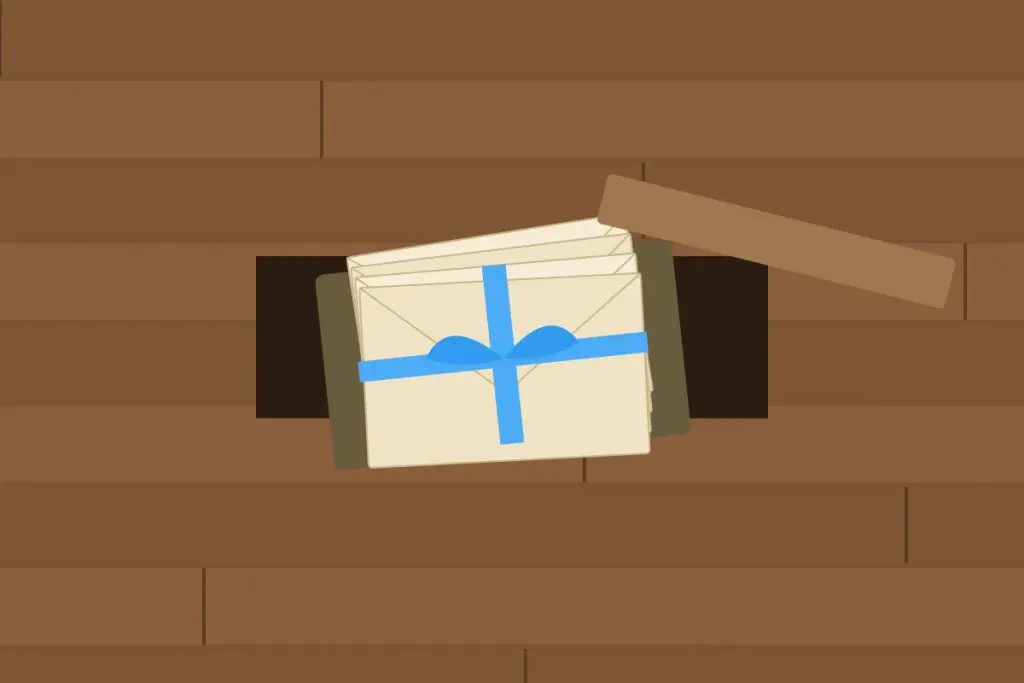
We had lived in the old house for only two weeks when my father pulled up the loose board in the hallway and found the letters.
There were forty-seven of them, tied together with a faded blue ribbon and wrapped in a piece of oilcloth to keep them dry. The paper was yellow. The handwriting was beautiful, the kind people don’t use anymore, with long loops and careful letters.
Every letter began the same way: Dear Elena.
And every letter ended the same way: I will wait for you at the station. Always. Your Michael.
* * *
“We should throw them away,” my mother said. “They’re not ours.”
“Exactly,” I said. “They’re not ours. So they belong to someone.”
I was fourteen. I had just moved to a new town where I knew nobody. I had nothing to do all summer. And now I had a mystery.
My father looked at me and smiled. “Two weeks,” he said. “If you can’t find who they belong to in two weeks, we’ll give them to the town museum.”
That night, I read all forty-seven letters.
They were dated from 1961 to 1963. Michael was a young man working far away, in another country, building roads. Elena lived here, in this town. Maybe in this very house. He wrote to her every two weeks. He described the mountains where he worked, the food, the other workers. He wrote that he was saving every penny so they could marry when he came home.
The last letter, number forty-seven, was different. It was short.
Dear Elena, my contract is finished. I am coming home on the 14th of June, on the evening train. I will wait for you at the station. Always. Your Michael.
And then nothing. No more letters.
What happened at the station? Did she come? Why were the letters hidden under the floor?
I could not sleep.
* * *
The next morning, I went to the town library. The librarian, Mrs. Clark, was an old woman with silver hair and very sharp eyes.
“I’m looking for a woman named Elena,” I said. “She lived on Willow Lane around 1961.”
Mrs. Clark looked at me over her glasses. “That’s a strange thing for a young man to look for.”
I showed her one of the letters. Her face changed. She read it slowly. Then she took off her glasses and looked out the window for a long time.
“Elena Rossi,” she said quietly. “Her family lived in that house. Everyone in town knew the story, once. Nobody talks about it now.”
“What story?”
She sighed. “Elena’s father did not want her to marry Michael. Michael was poor. Her father wanted her to marry a rich man’s son. When he found out about the letters, he was very angry. He told her Michael had found another woman abroad and was never coming back. And he hid the letters so she would believe it.”
I felt cold. “So she never knew? She never went to the station?”
“She never knew,” Mrs. Clark said. “She thought he forgot her. She moved to the city a year later, heartbroken. She never married.”
“And Michael?”
Mrs. Clark looked at me strangely. “That’s the part nobody understands,” she said. “Go to the train station. Any evening. Around seven o’clock.”
* * *
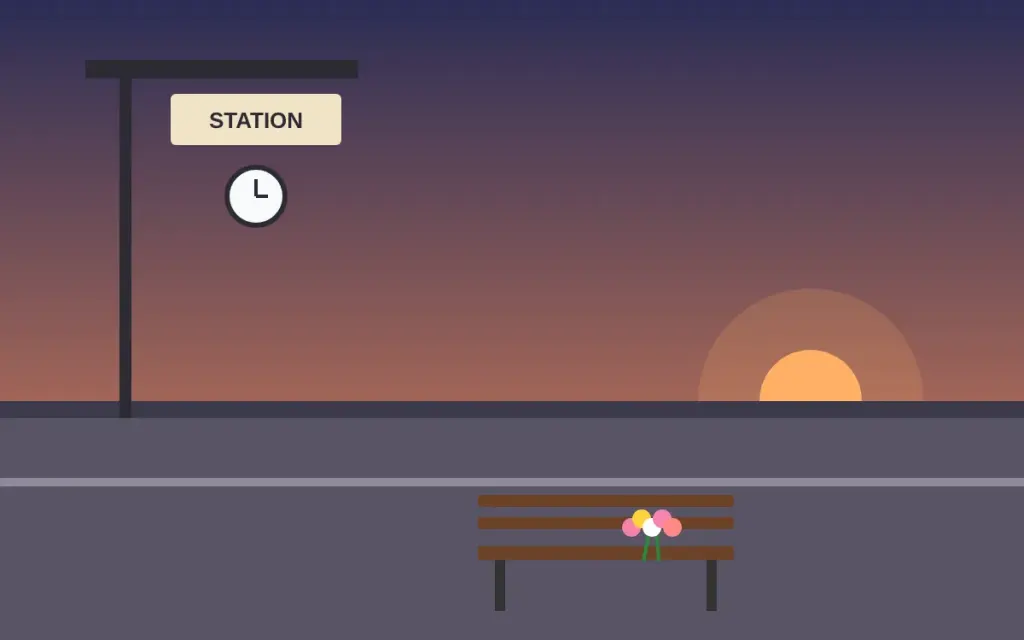
The train station was small and old. At seven o’clock, the evening train came in. A few people got off. And on the wooden bench on the platform, I saw him.
An old man in a grey coat and a flat cap. He was holding a small bunch of flowers. He watched every passenger who got off the train. When the last one walked away, he stood up slowly, put the flowers on the bench, and walked home.
The stationmaster saw me staring. “Old Michael,” he said. “He’s been coming every evening for sixty years. Every single evening. Rain, snow, it doesn’t matter. People say he’s waiting for a girl who never came.”
“He’s been coming every evening for sixty years.”
* * *
I ran all the way home. I told my parents everything. That night, my father helped me search on the computer. It took three days. But we found her.
Elena Rossi. Eighty-two years old. Living in a care home in the city, two hours away.
My father drove me there. A nurse took us to a sunny room where a small old woman with white hair sat by the window, reading.
“Miss Rossi?” I said. My voice was shaking. “My name is Noah. We live in your old house on Willow Lane. I found something that belongs to you.”
I put the bundle of letters in her lap.
She looked at the handwriting on the first envelope. And I watched sixty years disappear from her face.
“Michael,” she whispered.
She read the last letter. Then she looked up at me with eyes full of tears.
“He came back,” she said. “He really came back.”
“Miss Rossi,” I said gently. “He’s still waiting.”
* * *
The next evening, at seven o’clock, the train arrived at the little station. An old man in a grey coat sat on the bench, holding a small bunch of flowers, watching the doors.
A few passengers got off. Then a nurse stepped down, holding the arm of a small white-haired woman in a blue coat.
The old man stood up. The flowers fell from his hands.
For a long moment, neither of them moved. Two old people on a platform, looking at each other across sixty years.
Then Elena said, in a voice that was very small and very clear, “I’m sorry I’m late.”
And Michael, who had waited every single evening of his life, began to cry.
* * *
They were married in September, in a small ceremony with the whole town watching. Mrs. Clark from the library was there. So was the stationmaster. So were my parents and I, in the front row, as their special guests.
They lived together for four more years, in a small house near the station. Every evening at seven, they walked to the platform together, sat on the bench, and watched the train come in.
“Why do you still come?” I asked them once.
Michael smiled and held Elena’s hand. “Because now,” he said, “I’m not waiting anymore. I’m just remembering.”
A lie can steal years from people’s lives, but it cannot steal real love. And sometimes, a curious child is all it takes to bring the truth back into the light.