The man at table nine did not say please. He did not say thank you. He did not even look at Lina when she put the coffee in front of him.
“This is cold,” he said, and pushed the cup away.
It was not cold. Lina had made it ten seconds ago. But she smiled, took the cup back and made a new one.
“Still cold,” he said, without tasting it.
The other customers looked up. Lina felt her face get hot. She was twenty-two years old, and she had been working at Rosie’s Diner for three years. She worked mornings at the diner and evenings at a laundry. Every dollar went to rent, food and her mother’s medicine. She could not lose this job.
“I’m sorry, sir,” she said. “I’ll make you another one.”
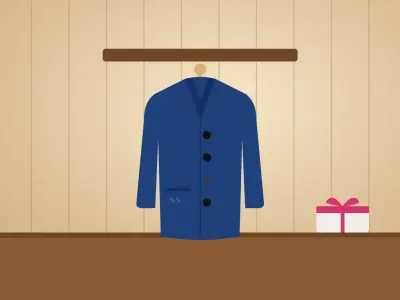
When she came back with the third cup, the man was standing up. He put on his expensive black coat. He dropped a few coins on the table, much less than the bill.
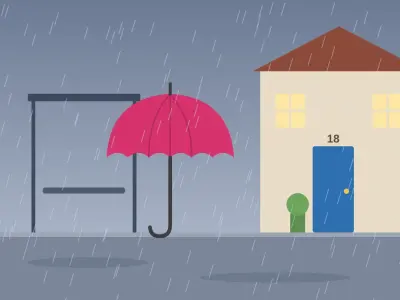
“Terrible service,” he said loudly, and walked out into the rain.
Lina stood there with the coffee in her hand. Old Rosie, the owner, came and put an arm around her shoulders.
“Some people carry a storm with them, honey,” Rosie said. “Don’t let it rain on you.”
* * *
Lina was cleaning table nine when she saw it.
A brown leather wallet had fallen between the seat and the wall. She picked it up. It was heavy. She opened it to find a name, and her breath stopped.
Inside were bank cards, a driver’s license, and money. A lot of money. She counted it with shaking fingers. Two thousand, four hundred dollars.
Lina sat down slowly.
Two thousand, four hundred dollars. That was four months of rent. That was her mother’s medicine until the summer. That was the winter coat she had not bought for herself for two years.
And it belonged to a man who had just humiliated her in front of everyone.
For one long minute, she just held it. A small voice inside her said, He would never know. He doesn’t even remember your face.
Then she thought of her mother. Her mother, who cleaned offices for twenty years. Her mother, who once walked back three miles in the snow to return ten dollars a shopkeeper gave her by mistake.
“What we have is little,” her mother always said. “But it is clean.”
Lina closed the wallet. She looked at the driver’s license. Daniel Whitmore. There was an address on the other side of the city.
* * *
After her shift, Lina took two buses across the city in the rain. The address was a tall glass building with a doorman in a uniform.
“I need to see Mr. Daniel Whitmore,” she said. “It’s important.”
The doorman looked at her wet shoes and her old jacket. “Mr. Whitmore does not see visitors without an appointment.”
“Please. I have something that belongs to him.”
He made a phone call. After a few minutes, the elevator opened, and there he was. Daniel Whitmore, in a grey suit, with the same hard face.
“You,” he said. “The waitress. What do you want? If this is about the tip…”
Lina held out the wallet. “You left this at the diner. Everything is inside. You can count it.”
He did not take it at first. He just stared at her. Then, slowly, he took the wallet and opened it. He looked at the money. He looked at her.
“Why?” he asked. His voice was different now. “I was rude to you. Very rude. Why would you bring this back?”
Lina thought about it. “Because it’s yours,” she said simply. “How you treated me is your business. How I act is mine.”
She turned and walked back into the rain. She did not see that Daniel Whitmore stood in the doorway for a long time, watching her go.

* * *
A week later, the bell over the diner door rang at seven in the morning. Lina looked up and almost dropped her coffee pot.
Daniel Whitmore walked in. He sat at table nine. When Lina came to take his order, he looked at her, and for the first time, he looked her in the eyes.
“Good morning,” he said. “Could I have a coffee, please?”
Lina brought it. He tasted it. “It’s perfect,” he said. “Thank you. And… I owe you an apology.”
He told her a story then. Two weeks before he came to the diner, his only daughter had stopped speaking to him. She told him he only cared about money and power, and that he treated people like they were nothing.
“I was angry,” he said. “I told myself she was wrong. And then I came here and did exactly what she said I do.” He looked at his hands. “When you brought back that wallet, it felt like someone held up a mirror. I did not like what I saw.”
Lina did not know what to say. So she just said, “Thank you for coming back.”
Before he left, he put an envelope on the table. “Please,” he said. “Don’t open it until I’m gone.”
* * *
Inside the envelope was a check for five thousand dollars and a short note.
A reward for your honesty. You have taught an old man something money could never teach him.
Lina read the note three times. Then she put the check back in the envelope.
The next day, she went back to the tall glass building. This time the doorman let her in right away.
“I can’t take this,” she told Daniel, and put the envelope on his desk. “If I take money for being honest, then it was never really honesty. It was a business deal.”
Daniel leaned back in his chair. Then he laughed, a real laugh, maybe the first one in years.
“You are a very stubborn young woman,” he said.
“My mother says the same thing.”
“All right. No reward.” He thought for a moment. “But tell me something. If you didn’t have to work two jobs, what would you do?”
Lina did not have to think. “I would be a nurse,” she said. “When my mother got sick, there was one nurse who was kind to us when nobody else was. I want to be that person for someone.”
Daniel nodded slowly. “My company has a scholarship program,” he said. “It’s for students who show real character. It’s not charity. You apply, you study, you work hard, and if your grades fall, you lose it.” He smiled. “Would you like an application form?”
Lina’s eyes filled with tears. This time, she said yes.
* * *
Four years later, Lina finished nursing school at the top of her class. Her mother sat in the front row in her best dress, crying the whole time. Old Rosie was next to her, crying even louder.
In the back row sat a man in a grey suit, and next to him, a young woman with his eyes. His daughter. They were speaking again.
Six years after that, Lina was working the night shift at City Hospital when a new patient came in. An older man with a weak heart. He was scared, and he was alone, and he did not want to be any trouble.
Lina checked his chart. Then she smiled and pulled a chair close to his bed.
“Good evening, Mr. Whitmore,” she said gently. “Don’t worry. I’m going to take very good care of you.”
He opened his eyes, and he knew her at once. He took her hand like a father.
“How you treated me is your business. How I act is mine.”
“Lina,” he whispered. “You came back.”
“Of course,” she said. “I always bring back what I find.”
Honesty is easy when it costs nothing. It means the most when nobody is watching and the price is high. One clean choice changed two lives in this story.