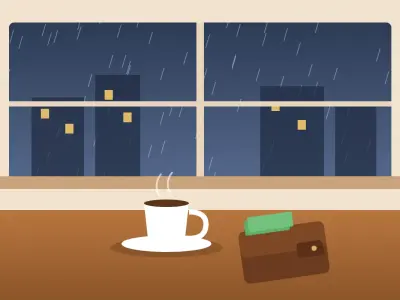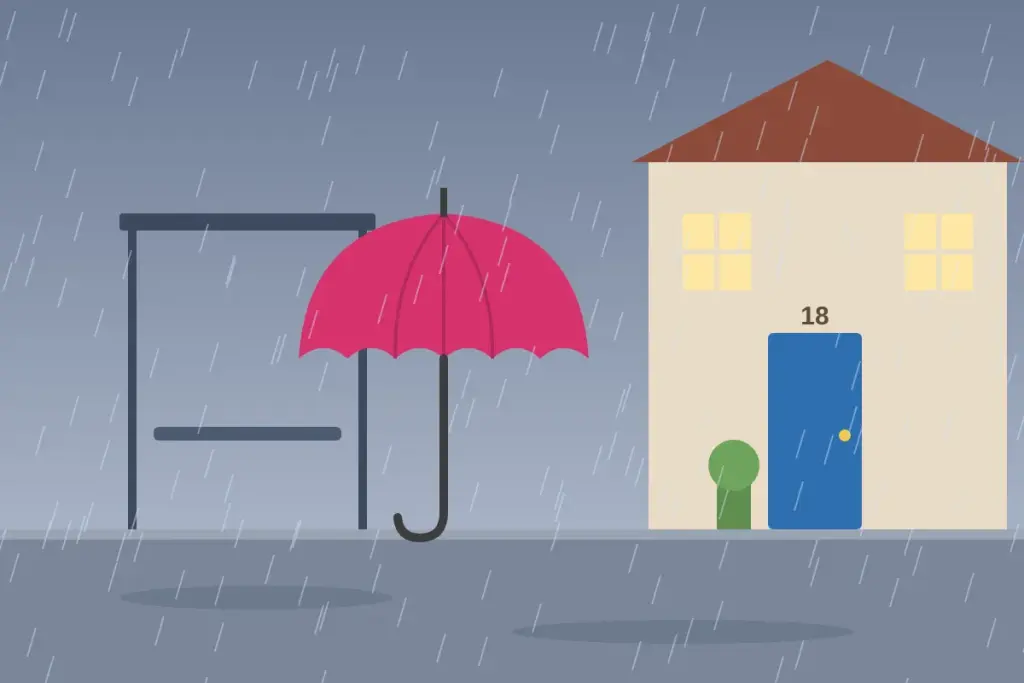
For twelve days in a row, it rained in the city. And for twelve days in a row, Yusuf saw the same old man at the bus stop on Hill Street.
The old man always wore a brown hat and carried a bag of bread. He never had an umbrella. He would stand under the small roof of the bus stop, but the wind blew the rain in sideways, and by the time the bus came, his coat was always wet.
On the thirteenth day, Yusuf walked over and held his umbrella over the old man’s head.
“Oh,” the old man said, surprised. “Thank you, son. But you will get wet.”
“I’m young,” Yusuf said with a smile. “I dry fast.”
The old man laughed. His name was Mr. Haddad. He was seventy-four, and he had been a school teacher for forty years. Every morning he walked to the bakery for fresh bread, because his daughter liked it warm with breakfast.
“She works too hard,” Mr. Haddad said. “She takes care of me, and she takes care of her students. Who takes care of her? That is what I want to know.”
The bus came. Yusuf helped him up the step and gave him the umbrella.
“No, no, I can’t take this,” Mr. Haddad said.
“Then bring it back tomorrow,” said Yusuf. “Same time.”
* * *
Mr. Haddad did bring it back the next day. And the day after that, Yusuf was there again, with the umbrella and a cup of tea from the corner shop.
It became a small habit. Every morning, at 7:40, the young engineer and the old teacher waited for the bus together. They talked about books, about the old days, about the right way to make lentil soup. Mr. Haddad told Yusuf about the students he had taught, some of them doctors and pilots now. Yusuf told Mr. Haddad about the bridges he helped design.
“A bridge,” Mr. Haddad said thoughtfully. “That is a good job. You connect people who could not reach each other before.”
One morning in the third week, Mr. Haddad did not come.
Yusuf waited. The bus came and went. He waited for the next one. Still nothing.
He was worried. He realized he did not even know where the old man lived. He only knew one thing: the bakery.
The baker knew Mr. Haddad very well. “The teacher? He lives on Olive Street, number eighteen, the blue door. Is something wrong?”
* * *
Yusuf stood in front of the blue door for a long time before he knocked. It felt strange. But he had to know the old man was all right.
The door opened. A young woman stood there. She wore a simple dark green scarf and had kind, tired eyes. She looked at him with polite surprise.
“Can I help you?”
Yusuf suddenly forgot every word he knew. “I… I’m sorry. My name is Yusuf. I wait for the bus with Mr. Haddad every morning. He didn’t come today, and I was worried.”
Her face changed. “You’re the umbrella man,” she said softly.
“The… what?”
“My father talks about you every day. The young man with the umbrella and the tea.” She smiled a little. “He has a fever. The doctor says it’s nothing serious, but he must rest for a week. He was very upset that he couldn’t tell you.”
From inside the house, a voice called out, “Sara! Who is it? Is it him? Tell him to come in!”
Sara looked embarrassed. “My father would like to see you. If you have time.”
* * *
Mr. Haddad was sitting up in bed with three blankets and a very red nose. When he saw Yusuf, his whole face lit up.
“You found me!” he said. “Sara, didn’t I tell you? A good young man. I told you.”
“Yes, Baba,” Sara said from the doorway. “You told me. Many times.”
Yusuf stayed for fifteen minutes. He did not want to make the old man tired. Sara brought tea and sat in the corner, quietly grading a pile of students’ notebooks. She did not say much. But once, when her father told a long, silly story about a goat that ate his homework in 1962, Yusuf saw her trying very hard not to laugh.
When he left, she walked him to the door.
“Thank you for checking on him,” she said. “Most people don’t notice old men at bus stops.”
“He noticed me first,” Yusuf said. “He just didn’t know it.”
He came back two days later with soup from his mother. And again on Friday with a book Mr. Haddad wanted. Each time, Sara was polite and kind, and each time, she kept a respectful distance. Yusuf liked that about her very much.
* * *
That Sunday, Yusuf sat down with his own parents at the kitchen table.
“I need to talk to you about something serious,” he said.
His mother put down her cup. His father raised one eyebrow.
Yusuf told them everything. The bus stop. The umbrella. The blue door. The quiet teacher with the kind eyes who took care of her father and never complained.
His mother smiled slowly. “You want to ask for her hand,” she said. It was not a question.
“I want to do it the right way,” Yusuf said. “With you. With her father. And only if she wants it too.”
His father was quiet for a moment. Then he stood up and put his hand on his son’s shoulder.
“Then we will go and meet this family,” he said. “Properly.”
* * *
The next Friday, Yusuf and his parents knocked on the blue door. Yusuf’s mother carried a box of sweets. His father wore his best jacket. Yusuf thought his heart was going to jump out of his chest.
Mr. Haddad, fully healthy again, opened the door. When he saw the three of them, he understood at once. He looked at Yusuf for a long moment. Then he laughed out loud.
“Finally!” he said. “Come in, come in. I was starting to think I would have to ask you myself.”
They sat in the small living room. The fathers talked. The mothers talked. Yusuf mostly looked at his shoes.
Then Mr. Haddad turned to his daughter. “Sara,” he said gently. “This is your life. Your choice. Take all the time you need.”
Everyone went quiet. Sara looked at Yusuf for the first time that evening.
“Can I ask you one question?” she said.
“Of course.”
“When you first held the umbrella over my father, you didn’t know he had a daughter. You didn’t know anything about him. Why did you do it?”
Yusuf thought about it honestly. “Because he was getting wet,” he said. “And I had an umbrella.”
Sara smiled, and this time she did not hide it.
“Because he was getting wet. And I had an umbrella.”
“That’s the answer I hoped for,” she said. She turned to her father. “Baba, I would like to know him and his family better. Then I will give my answer.”
Mr. Haddad clapped his hands together. “That means maybe,” he told Yusuf’s parents happily. “And with my daughter, maybe means yes.”
“Baba!” Sara said, her cheeks red. Everyone laughed.
* * *
They were married in the spring, when the rain had finally stopped. The wedding was small and warm, full of family and good food. Half of Mr. Haddad’s old students came, and every one of them gave a speech about their favorite teacher.
At the end of the night, Mr. Haddad stood up and raised his glass of juice.
“I want to say one thing,” he said. “For many years, I asked the same question. Who will take care of my daughter, when she is always taking care of everyone else?” He looked at Yusuf. “I got my answer at a bus stop, in the rain. A young man who helps a stranger without being asked will never stop helping the people he loves.”
Yusuf looked at his new wife. Sara looked back at him. Outside, the sky was clear and full of stars.
But Yusuf still kept an umbrella by the door. Just in case.
Real love often begins with good character. A small kindness shown to a stranger told a whole family everything they needed to know.