It started with a bag of rice.
My mother came home from the grocery store one Tuesday evening, put her shopping bags on the kitchen table, and looked at the receipt with a strange face.
“Paid,” she said. “Someone paid for everything.”
“What do you mean?” I asked. I was thirteen, doing my homework at the table.
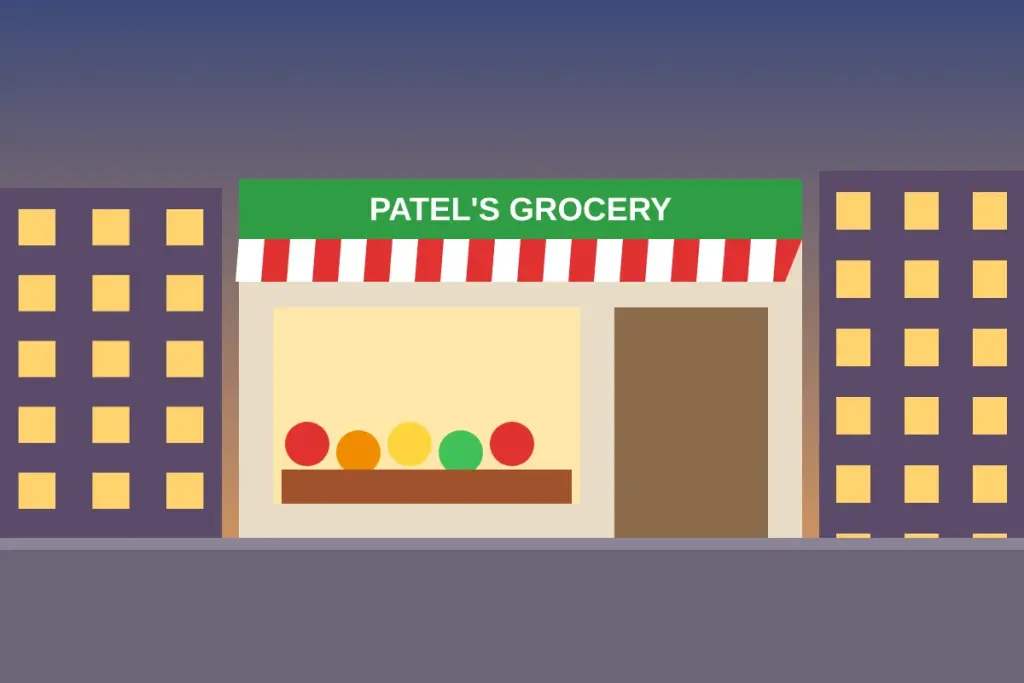
“At the checkout, Mr. Patel said my bill was already paid. He said someone left money with him and told him to pay for Mrs. Sara Malik’s groceries this week.” She sat down slowly. “He wouldn’t say who.”
* * *
That year had been the hardest year of our lives. My father had lost his job at the factory in the spring. He was looking for work every day, but there was nothing. My mother cleaned houses. My little brother Yasin needed glasses, and we could not buy them. Every week, my mother counted the money for food three times, and every week, it was not quite enough.
We did not tell anyone. My father was a proud man. He would rather eat less than ask for help.
So who knew?
The next Tuesday, it happened again. And the Tuesday after that. Every week, my mother went to Mr. Patel’s shop, filled her basket, and every week, the bill was paid.
“Please,” my mother begged Mr. Patel. “Just tell me who it is. I need to thank them.”
Mr. Patel shook his head kindly. “I promised,” he said. “And a promise is a promise.”
* * *
My father was not happy.
“We are not a charity,” he said angrily. “I don’t want strangers feeding my family.”
“It’s not a stranger,” my mother said softly. “A stranger wouldn’t know our name. Or what day I shop. It’s someone who knows us. Someone who cares.”
That made it worse for him, I think. Someone we knew had seen how poor we were.
But for me, it was the best mystery in the world. I decided to find out who it was.
* * *
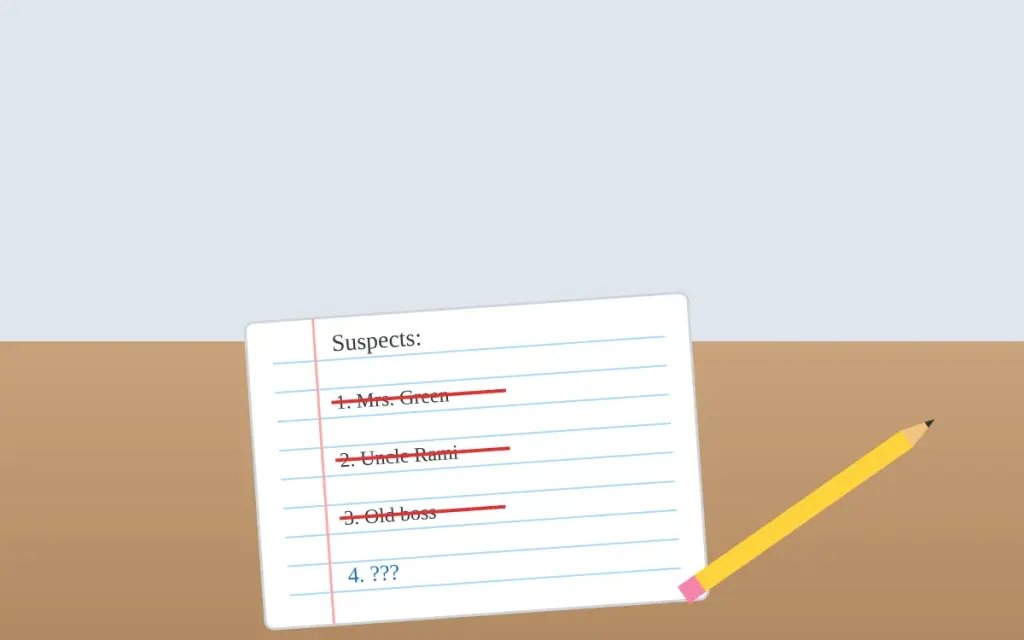
I made a list of suspects in my school notebook.
Number one: our neighbor, Mrs. Green. She was rich, and she liked my mother. But she had moved to her daughter’s house in another city two months ago.
Number two: my uncle Rami. But my uncle had five children and less money than we did.
Number three: my father’s old boss from the factory. Maybe he felt guilty? But my father said the man had moved away when the factory closed.
I crossed them all out. I had no more ideas.
So I did what any good detective does. I watched.
Every Monday after school, I sat on the wall across the street from Mr. Patel’s shop with a book, pretending to read. I watched everyone who went in. I was sure that the person who paid for our food must come on Monday, before my mother came on Tuesday.
For three Mondays, I saw nothing unusual. Old women with shopping bags. Workers buying sandwiches. Children buying sweets.
On the fourth Monday, I saw him.
* * *
It was an old man with a walking stick. He walked very slowly. He went into the shop, but he did not take a basket. He went straight to the counter, talked to Mr. Patel for a minute, and gave him an envelope. Then he walked out.
And I knew him.
It was Mr. Abbas. The old man who lived alone at the end of our street.
I did not understand. Mr. Abbas was not rich. He lived in a small, old house with a broken gate. He wore the same brown coat every day. Why would he pay for our groceries?
Then I remembered something. Something from two years ago.
* * *
It was a terrible winter. There was a big snowstorm, and the whole street was buried. The power was off for two days.
On the second night, my father said, “Has anyone checked on old Abbas?”
Nobody had. My father put on his boots and walked through the deep snow to the end of the street. He found Mr. Abbas sitting in the dark in his freezing house, wrapped in three blankets, too weak to get up. His heater had stopped working. He had not eaten for a day.
My father carried him on his back through the snow to our house. My mother made soup. Mr. Abbas slept on our sofa for three nights, until the power came back. My father fixed his heater. Then he fixed his broken window. Every week after that, all winter, my father went to check on him.
My father never talked about it. I think he forgot.
But Mr. Abbas did not forget.
My father forgot. But Mr. Abbas did not forget.
* * *
That evening, I told my parents what I had seen. My father was quiet for a long time. Then he stood up, put on his coat, and walked out without a word. I followed him.
He knocked on Mr. Abbas’s door. The old man opened it, saw my father’s face, and understood.
“Abbas,” my father said. His voice was rough. “Why? You don’t have money to give away.”
Mr. Abbas smiled. “I have a little pension. I have no family to spend it on. I eat very little.” He put his hand on my father’s arm. “Two winters ago, you carried an old man through the snow when nobody else remembered he was alive. I’ve been waiting for a chance to carry you back.”
My father, the proudest man I ever knew, put his face in his hands and cried right there in the doorway.
* * *
My father found a new job a month later, at a construction company. On his first payday, he did two things.
First, he bought my little brother his glasses.
Second, he went to Mr. Patel’s shop, gave him an envelope, and said, “Every Tuesday. For Mr. Abbas’s groceries. Don’t tell him who.”
Mr. Patel smiled. “A promise is a promise,” he said.
Mr. Abbas comes for dinner at our house every Friday now. He sits at the head of the table, in the best chair, and my mother makes his favorite soup. He still doesn’t know who pays for his food.
Or maybe he does. Sometimes, when he looks at my father across the table, he smiles in a way that makes me think he knows exactly.
Kindness has a long memory. The good we do, even when we forget it, can come back to us at the moment we need it most.