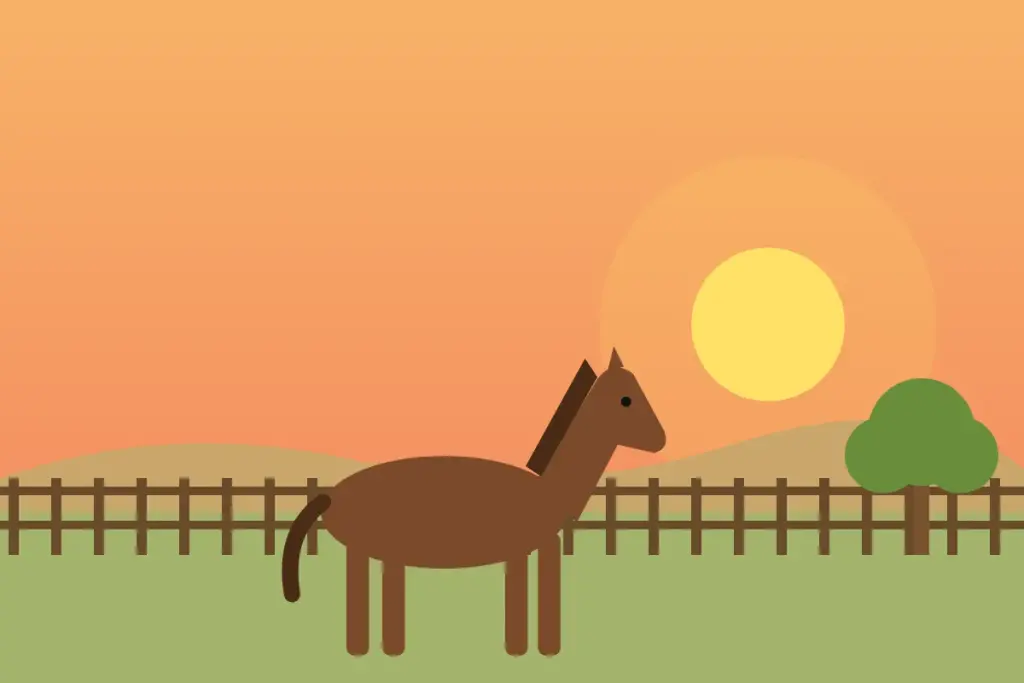
The horse was standing alone at the back of the auction field, and nobody was looking at him.
He was old. His brown coat had grey hairs around his eyes and mouth. He was thin, and one of his back legs did not move quite right. The sign on his gate said: Name: Captain. Age: 19. Starting price: $50.
Fifty dollars. That was the price of a horse that nobody wanted.
Lily was twelve. She had come to the auction with her father to buy chickens. But when she saw the old horse standing alone, with his head low, she could not walk past.
“Dad,” she said. “Look at him.”
Her father looked. He was a careful man. They had a small farm, and every dollar mattered. “He’s old, Lily. He’s lame. He can’t work. A horse like that only costs money.”
“What happens to him if nobody buys him?”
Her father did not answer. That was the answer.
* * *
The auction began. Young horses sold for a thousand dollars, two thousand, five thousand. People clapped and laughed. Then the auctioneer came to the back of the field.
“Captain,” he said in a tired voice. “Nineteen years old. Some problems with the leg. Fifty dollars. Do I hear fifty?”
Silence.
“Forty? Thirty?”
Lily looked at her father. He was looking at the ground. She took a breath.
“Twenty-two dollars and fifty cents,” she said loudly.
Everyone turned to look. A twelve-year-old girl in muddy boots was holding out a small cloth bag. It was all her birthday money, and the money from selling eggs for a whole year.
The auctioneer looked at her father. Her father looked at Lily for a long moment. Then he sighed, and nodded.
“Sold,” said the auctioneer, “to the young lady.”
* * *
Captain did not like his new home at first.
He stood in the corner of the small field and did not eat much. When Lily came close, he moved away. He did not trust people. Somebody, somewhere, had not been kind to him.
“Give him time,” her grandmother said. She had grown up with horses. “An old heart heals slowly. But it heals.”
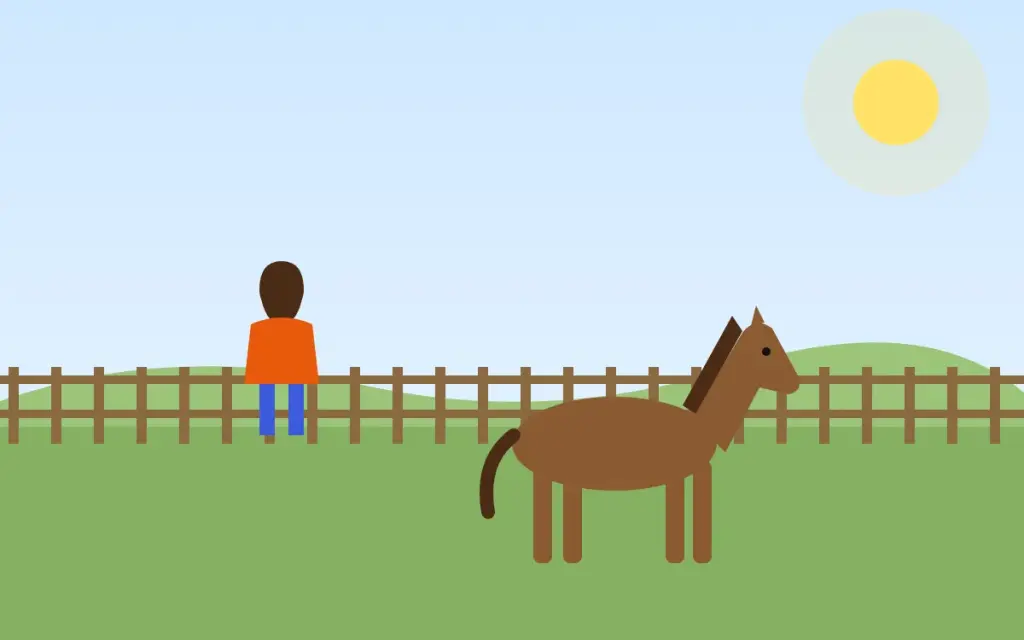
So Lily gave him time. Every morning before school, she brought him hay and water. She did not try to touch him. She just sat on the fence and talked to him about her day, her friends, her math homework.
After two weeks, Captain started eating while she talked.
After a month, he stopped moving away.
After two months, on a cold morning in November, he walked slowly across the field, put his big soft nose against her shoulder, and breathed out a long, warm breath.
Lily did not move. She hardly breathed. Then, very gently, she put her hand on his neck.
“Hello, Captain,” she whispered. “I’m glad you’re here.”
* * *
That winter, Lily learned everything about old horses. She read books from the library. She asked the vet a hundred questions. She made him warm mash with oats and carrots. She cleaned his hooves and brushed his coat every day until it began to shine.
Slowly, Captain got stronger. He gained weight. His leg would never be perfect, but he walked more easily. In the spring, he even started to trot a little in the field, his head high, like he remembered being young.
Her father watched from the kitchen window. He never said much. But one day Lily saw him put an extra bag of carrots in the barn, and she smiled to herself.
* * *
The storm came in April.
It was a terrible night. The wind was so strong that it broke branches from the trees. The rain came down like a river. At midnight, the power went out.
Lily woke up to a sound she had never heard before. It was Captain. He was calling loudly, again and again, from the barn. It was a high, wild sound, full of fear.
“Something’s wrong,” she said, and ran to her parents’ room.
Her father pulled on his boots and took a flashlight. “Stay here,” he said.
But Lily followed him.
The barn door was open, banging in the wind. Captain was standing at the far end, kicking the wall and calling. And then her father’s flashlight found it. Smoke. A thin line of grey smoke was coming from the corner of the barn, where the old electric wires went into the wall.
“The wires,” her father said. “The storm must have damaged them. Lily, get your mother. Call for help. Now!”
* * *
The fire was small when they found it. Her father put it out with two buckets of water and a heavy blanket before it could reach the hay. If it had reached the hay, the firefighter said later, the whole barn would have burned in minutes. And maybe the house too, with the wind blowing the way it was.
“Who found it?” the firefighter asked.
Lily’s father looked across the yard. Captain was standing quietly now, in the rain, his old head hanging low, tired.
“He did,” her father said. “That old horse nobody wanted.”
“That old horse nobody wanted.”
Later that night, when everyone was safe and the storm had passed, Lily found her father in the barn. He was standing next to Captain, brushing the rain from his coat. He did not hear her come in.
“I was wrong about you,” he was saying softly to the horse. “I said you would only cost us money. I said you were worth nothing.” He stopped brushing. “You saved my family tonight. I’m sorry.”
Captain turned his head and pressed his nose against her father’s chest.
* * *
Captain lived for seven more years. He never worked a day on the farm. He did not need to. He spent his days in the green field behind the house, and in the evenings Lily sat on the fence and told him about her day, just like the first time.
When Lily went away to study to be a veterinarian, Captain was the reason. And when she opened her own clinic years later, she put an old photograph on the wall by the door. A thin brown horse with grey around his eyes. Underneath, she wrote one line:
Nobody is worth nothing.
The world often decides too fast who is worth something. Twenty-two dollars and a little patience gave an old horse a home, and the horse gave back far more than anyone expected.