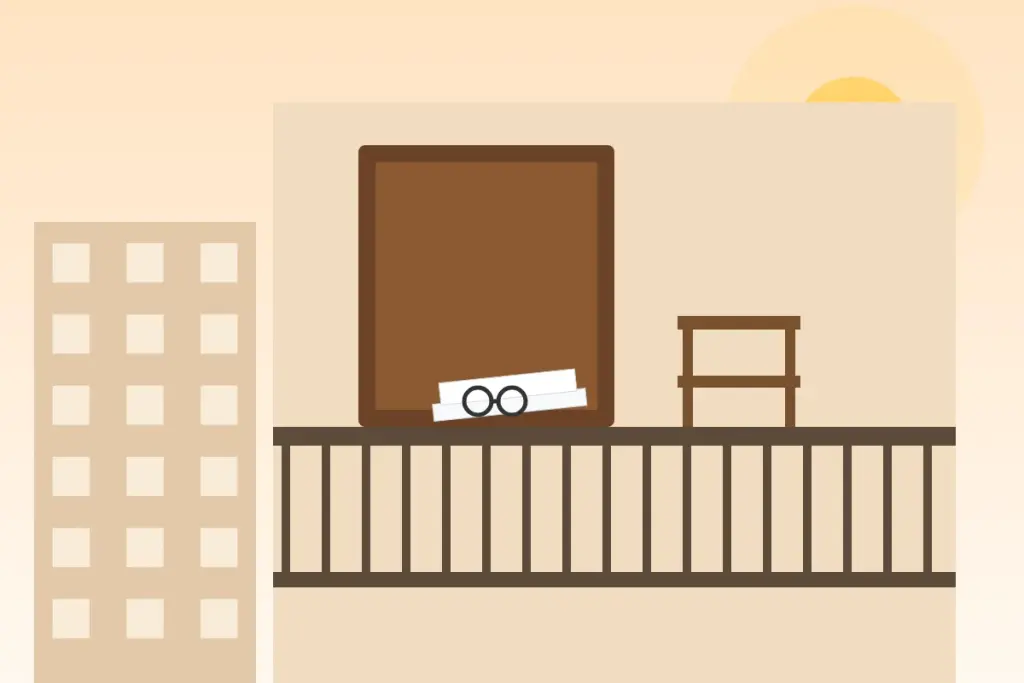
Every morning at eight, old Mr. Hamdan sat on his balcony with a newspaper he could not read.
He had been a journalist for fifty years. He had written about wars and elections, about new bridges and old songs. Then, at seventy-five, his eyes began to fail. First the small letters disappeared. Then the big ones. Now, at seventy-nine, he could only see light and shadows.
But he still bought the newspaper every morning. He still sat on the balcony and held it open on his knees. Old habits, he said, are the last things to go.
Nadia lived in the apartment below. She was eleven, and she watched him from the stairs every morning on her way to school.
* * *
One Saturday, Nadia’s mother sent her upstairs with a plate of warm bread for the old man. He opened the door slowly, feeling the wall with his hand.
“Thank you, child,” he said, smiling in her direction. “Your mother is very kind.”
Nadia saw the newspaper on the table, still folded, from that morning. She hesitated. Then she asked, “Mr. Hamdan, do you want me to read it to you?”
The old man went very still. For a moment Nadia thought she had said something wrong.
“Nobody has asked me that,” he said quietly. “In four years, nobody has asked me that.”
She sat down on the little chair next to him and opened the paper. She read slowly, because some of the words were long and difficult. When she did not know a word, she spelled it, and he told her what it meant.
She read for an hour. When she finished, Mr. Hamdan had tears on his cheeks.
“Will you come again?” he asked.
“Tomorrow,” said Nadia.
* * *
She came every day after that. Before school, she read him the headlines. After school, she read the longer articles. On weekends, she read everything, even the weather and the football scores, which he said were the most important part.
At first, she read like a child, stopping and starting. But Mr. Hamdan was a patient teacher. He showed her how to read with feeling, how to pause at a comma, how to let the important words land.
“A good article is like music,” he told her. “You must hear where it goes up and where it goes down.”
And he did more than listen. After each article, he asked her questions. “What do you think about this? Is the writer fair? What question did he forget to ask?”
Nobody had ever asked Nadia what she thought about anything important. At first she did not know what to say. But soon she had a lot to say. Too much, sometimes. Mr. Hamdan laughed and said she argued like a real journalist.
* * *
When she was thirteen, Mr. Hamdan gave her an assignment.
“Write something,” he said. “About anything. Then read it to me.”
She wrote about the old woman who sold flowers on the corner of their street, who had been there every day for thirty years and whose name nobody knew. Nadia asked her. Her name was Fatima. She had five grandchildren and she knew the name of every flower in Latin.
Nadia read it to him. When she finished, he was quiet for a long time.
“Again,” he said.
She read it again.
“You found the story nobody else saw,” he said finally. “That is the whole job. Everything else, we can teach. That part, you either have it or you don’t.” He reached out and found her hand. “You have it, Nadia.”
“You found the story nobody else saw. That is the whole job.”
* * *
For seven years, Nadia read to Mr. Hamdan every day. She grew from a shy eleven-year-old into a confident young woman. She won a writing competition at school, then a national one. When she was eighteen, she was accepted to study journalism at the best university in the country.
On her last morning before leaving, she read him the newspaper one final time. Then she put it down.
“Who will read to you now?” she asked. Her voice was shaking.
Mr. Hamdan smiled. “Don’t worry about me,” he said. “Your little brother has been practicing. He reads terribly. I’m going to enjoy teaching him.”
* * *
Mr. Hamdan lived to be eighty-six. Nadia came home to see him every holiday. And every visit, she brought something new to read to him: her own articles, from the student newspaper, then from a real newspaper, then from a big newspaper in the capital.
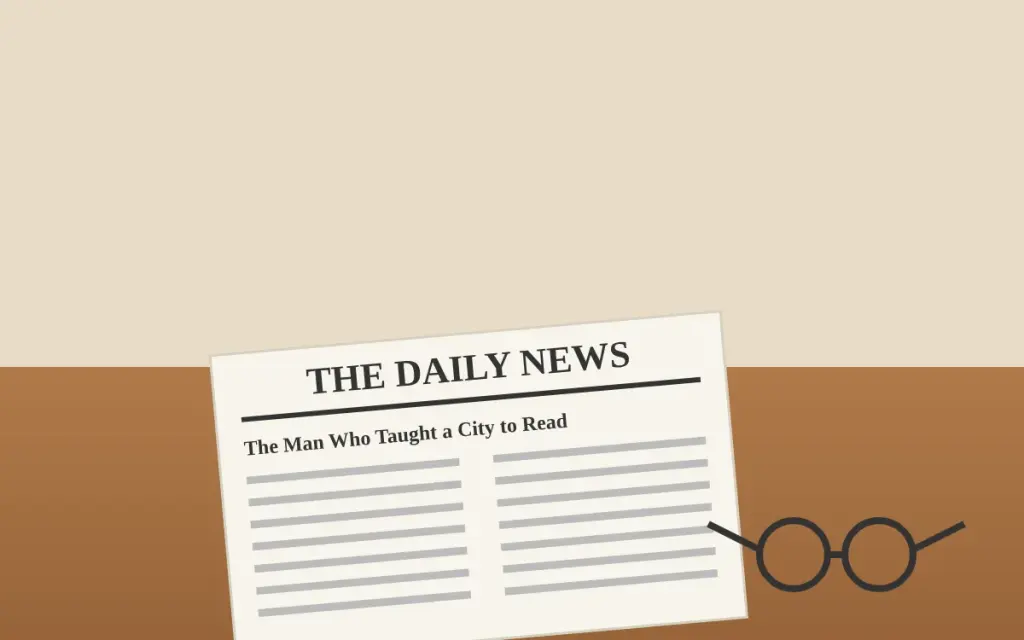
The last time she visited, she brought a special one. It was a long article on the front page of the weekend edition. The title was: The Man Who Taught a City to Read.
It was about him. His fifty years as a journalist. And the eleven-year-old girl who once offered to read him the paper.
She read it to him slowly, with feeling, pausing at every comma, the way he had taught her. When she finished, he did not say anything for a long time. Then he held out his hand, and she put the newspaper in it.
He held it on his knees, the way he always had. He could not see the letters. But he ran his fingers over the page, over the words she had written about him, like he could feel them.
“Again,” he whispered.
So she read it again.
* * *
Today, Nadia is one of the best-known journalists in the country. People often ask her who her greatest teacher was. They expect the name of a famous professor, or an editor at a big newspaper.
She always gives the same answer.
“A blind man on a balcony,” she says. “He couldn’t see a single word. But he taught me how to see everything.”
A small offer to help a lonely neighbor opened a door for both of them. When we give our time to someone, we often receive far more than we give.