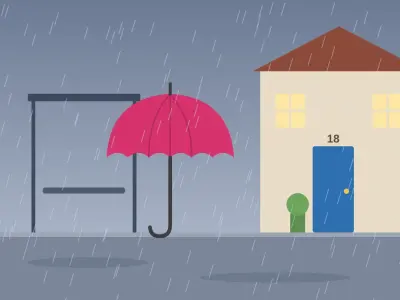
When I was ten, my parents sent me to spend the summer with my grandfather in the village. I did not want to go.
“There’s no internet there,” I complained. “There’s nothing to do.”
“There’s your grandfather,” my mother said. “That’s something.”
I did not think so. I barely knew him. He was a quiet old man with big rough hands who called on my birthday every year and said only three sentences: “Happy birthday, Adam. Are you studying? Good.” Then he gave the phone back to my mother.
So I sat in the back of the car for five hours with my arms crossed, watching the city disappear.
* * *
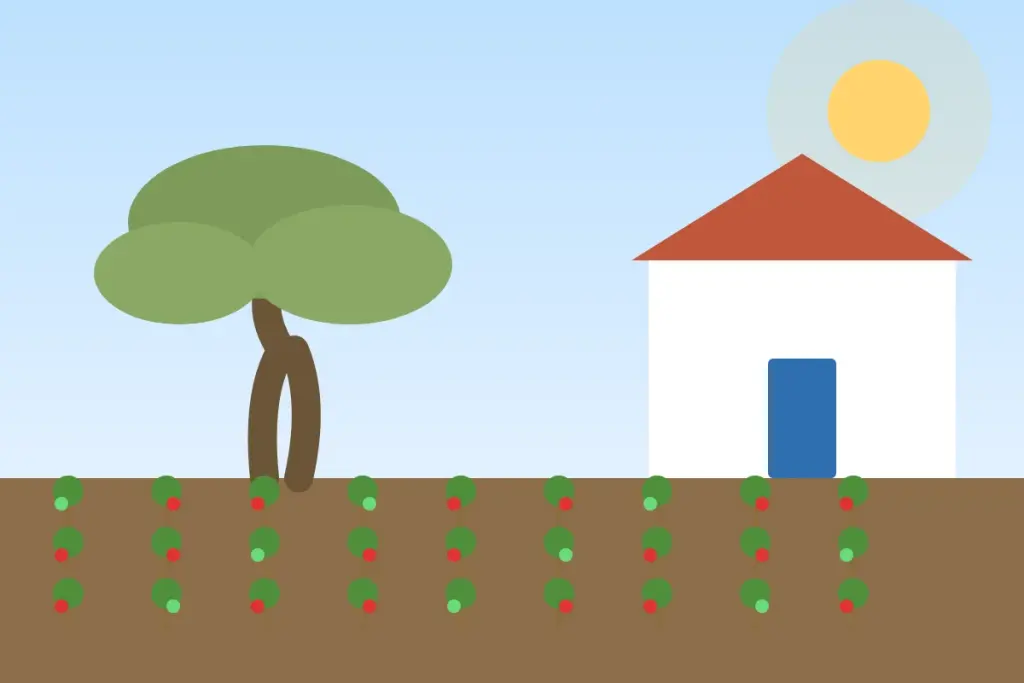
Grandpa Ibrahim’s house was small and white, with a blue door and a big garden behind it. The garden was the biggest thing I had ever seen that was not a park. There were rows of tomatoes and peppers, beans climbing up wooden sticks, fig trees, an old olive tree with a twisted trunk, and flowers everywhere.
“Breakfast is at six,” he said on the first night. “Then we work.”
“Six in the morning?” I said. “It’s summer vacation!”
He just looked at me with his calm brown eyes. “The plants don’t know it’s vacation.”
The first week was terrible. I woke up at six. I pulled weeds until my back hurt. I carried water in heavy cans. The sun was hot and the flies were everywhere. Grandpa hardly spoke. He just worked, slowly and steadily, from morning until lunch.
At night I called my mother and begged her to come and get me.
“Give it one more week,” she said.
* * *
In the second week, something small happened.
I was pulling weeds near the tomatoes when I found a tiny green tomato, hidden under the leaves. It was the size of a marble. The day before, it had been a yellow flower. I knew because I had seen it.
“Grandpa,” I called. “Look. It was a flower yesterday.”
He came over and knelt beside me. He looked at the little tomato for a long time, as if it was the first one he had ever seen.
“Yes,” he said. “Every day, something changes. Most people are too busy to notice.” He looked at me. “You noticed.”
It was a small thing. But it was the first time he had said anything to me that wasn’t an instruction. And I felt strangely proud.
* * *
After that, I started noticing everything. The beans that grew two fingers taller every night. The bees that came to the flowers at exactly the same time each morning. The fig that turned from green to purple. I started asking questions, and Grandpa started answering them.
Slowly, he began to talk more. Not about plants. About everything.
He told me about the olive tree. His own grandfather had planted it, more than a hundred years ago. “He knew he would never eat its olives,” Grandpa said. “An olive tree takes many years. He planted it for his children, and their children. For me. And now, for you.”
“Why would anyone plant something they’ll never see grow?” I asked.
Grandpa smiled. “That is the most important question you will ever ask,” he said. “Think about it this summer.”
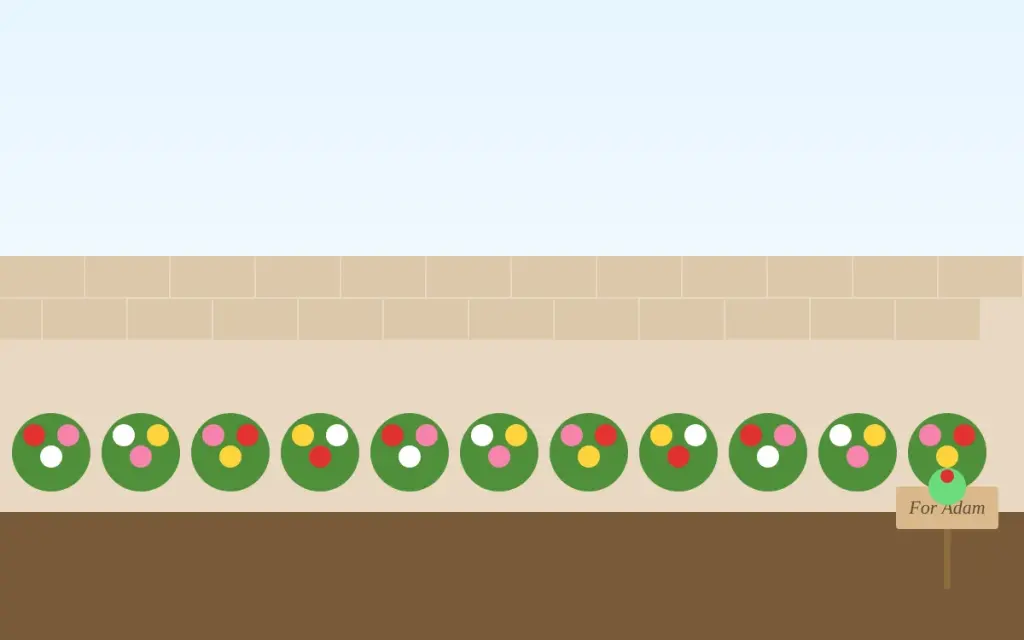
He told me about my grandmother, who died before I was born. She loved roses, so he planted a new rose bush every year on her birthday. There were thirty-one rose bushes now along the garden wall. Red, white, pink, yellow.
“Thirty-one years,” I said. “You still plant one every year?”
“Every year,” he said. “Love is not something you feel once. It’s something you keep planting.”
“Love is not something you feel once. It’s something you keep planting.”
* * *
By the end of the summer, I did not want to leave.
I woke up before six without an alarm. My hands had calluses. My skin was brown from the sun. I knew the name of every plant in the garden. And I knew my grandfather. Really knew him. His quiet jokes. His way of humming old songs while he worked. The way he talked to the plants when he thought I couldn’t hear.
On my last morning, he gave me a small paper bag.
“Seeds,” he said. “From the tomatoes you watched grow. Plant them at home. On your balcony, in a pot. And remember your question.”
I hugged him. He was surprised for a second. Then his big rough arms held me tight.
* * *
I went back every summer after that. Every single one, until I was twenty.
That was the year Grandpa Ibrahim died, quietly, in the spring, in his sleep. My mother said he had been in the garden the day before, planting.
When we went to the village for the funeral, I walked into the garden alone. Everything was green and growing. The tomatoes were already climbing. The olive tree stood where it always stood, old and twisted and strong.
And along the garden wall, I counted the rose bushes. Thirty-one. Thirty-two. Thirty-three. All the way to forty-one.
And then, at the end of the row, one more. A small, new one. Freshly planted. With a little wooden sign next to it, in his careful handwriting.
For Adam. So he remembers to keep planting.
* * *
I am thirty-five now. I have a son of my own. His name is Ibrahim.
Last spring, we planted an olive tree together in our garden. He is six, and he asked me the same question I once asked.
“Why are we planting it, Baba? It will take forever.”
I knelt beside him in the soil and finally gave him the answer it took me a whole life to understand.
“Because someone once planted one for me.”
The best things our grandparents give us are not things at all. They are patience, attention, and the habit of planting good things for people who will come after us.